7 Warning Signs Your Tree Is Unhealthy (Before It Becomes Dangerous)
An unhealthy tree is identified by structural abnormalities like deep trunk cracks, biological indicators such as shelf fungi, and foliage issues like premature leaf drop. Recognizing these seven warning signs early allows homeowners to implement corrective pruning or necessary removal, preventing property damage and ensuring safety during storms.
Maintaining the canopy of the Queen City is a responsibility every homeowner shares. Trees do more than provide shade and curb appeal; they are living organisms that interact with the local ecosystem. In Charlotte, North Carolina, our trees face unique challenges, from the dense Piedmont clay soil to the volatile weather patterns that bring heavy thunderstorms and occasional ice. When a tree begins to fail, it often provides subtle clues long before it poses a physical threat to your home or family.
Why is early diagnosis essential for tree health?
Early detection of tree distress is the difference between a simple pruning job and a costly emergency removal. When a tree’s health is compromised, its structural integrity weakens. A tree that looks sturdy to the untrained eye may actually be hollowed by rot or strangled by girdling roots. By identifying issues early, you can:
- Extend the life of the tree through targeted Tree Disease & Infection Services .
- Reduce the risk of falling limbs during North Carolina storm seasons.
- Save money by avoiding emergency Storm Cleanup costs.
- Protect your property value and landscaping investments.
- Ensure the safety of pedestrians and neighbors.
Waiting until a branch falls on a roof or a power line is a reactive approach that increases liability. Professional arboriculture focuses on proactive management, using science-based methods to bolster a tree’s natural defenses. For homeowners in the Charlotte area, staying vigilant means observing changes in bark, leaves, and the ground surrounding the root zone.

The Seven Warning Signs of Tree Distress
Understanding the symptoms of a failing tree requires a systematic approach. If you notice any of the following seven signs, it is time to consult a professional for a thorough assessment.
1. Dead Wood and Brittle Branches
Dead wood is perhaps the most obvious sign of trouble. Also known as "widowmakers," dead branches lack the flexibility of healthy wood. They are prone to snapping without warning, especially under the weight of snow or during high winds. Look for branches that lack leaves during the growing season or bark that falls away easily to reveal dry, brittle wood underneath.
2. Deep Cracks and Cavities in the Trunk
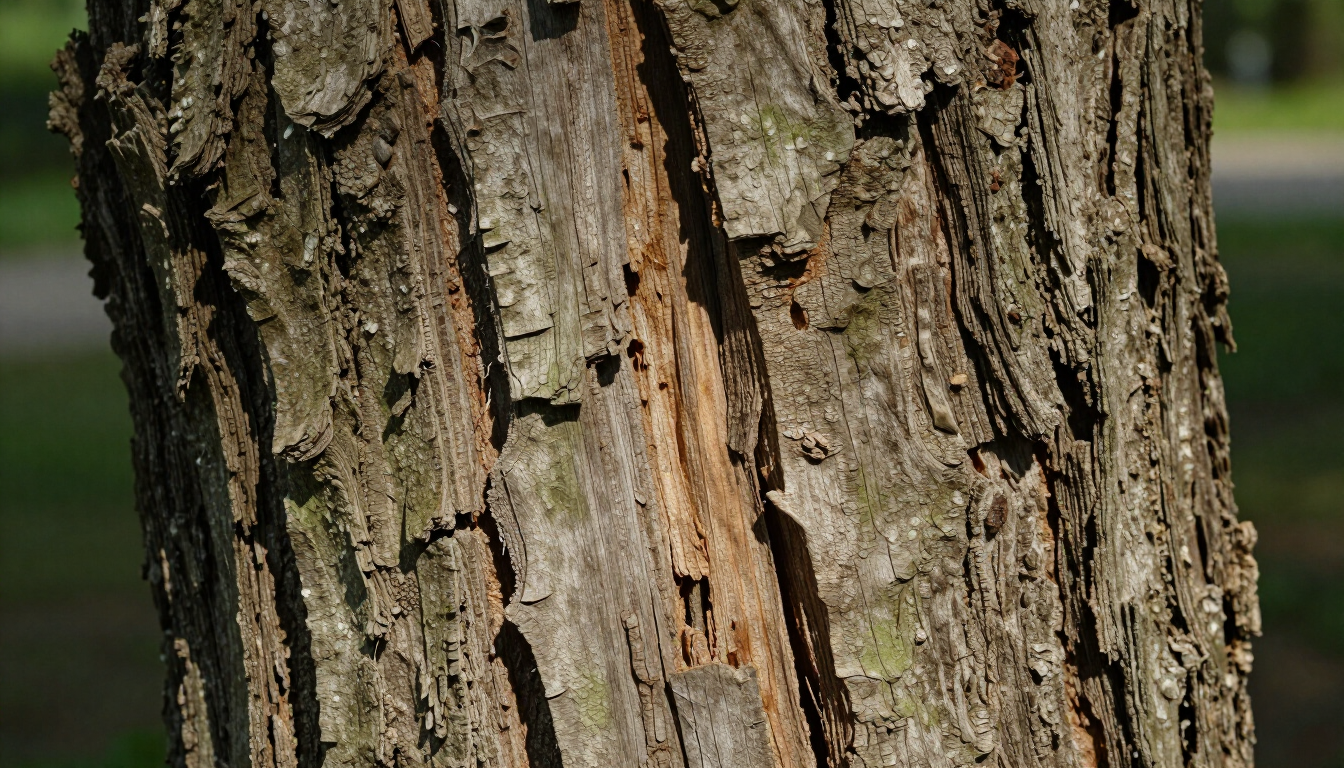
While some bark furrows are natural, deep cracks that penetrate the wood of the trunk are structural red flags. These often occur at the junction of two main stems (a V-crotch) or as a result of previous storm damage. Cavities, or holes in the trunk, suggest internal decay. While a small hole might be a nesting site for birds, a large cavity indicates that the tree is rotting from the inside out, losing the "column" of strength it needs to stand upright.
3. Fungi and Mushrooms at the Base
If you see mushrooms, conks, or shelf fungi growing on the trunk or around the root flare, the tree is likely experiencing internal rot. These organisms feed on decaying organic matter. Their presence at the base of a living tree means the root system or the heartwood is decomposing. This is a critical sign of an unhealthy tree that may require immediate intervention to prevent a total collapse.
4. Premature Leaf Drop or Discoloration
Trees in Charlotte should be lush and green throughout the spring and summer. If your tree begins losing leaves in July or if the leaves turn brown and shrivel while others are healthy, the tree is under stress. This could be due to nutrient deficiencies in the soil, lack of water, or a more serious vascular disease that prevents the tree from transporting water to its highest points.
5. Peeling Bark or Seeping Sap
Bark acts as the tree's protective skin. In many species, peeling bark is a sign that the tree is no longer producing new wood in that area. If you notice large patches of bark falling off to reveal smooth wood or if there is "bleeding" sap (canker), the tree may be fighting an infection. Cankers are localized dead areas on branches or trunks caused by fungi or bacteria.
6. A Sudden Lean or Root Heaving
Trees rarely grow perfectly straight, but a sudden change in the angle of a tree is an emergency. This often happens after a heavy rain when the soil becomes saturated and the roots lose their grip. Look for heaving soil or cracked earth on the side opposite the lean—this indicates that the roots are pulling out of the ground. A leaning tree is a prime candidate for Tree Removal before the next storm hits.
7. Pests and Visible Infection
Tiny holes in the bark, sawdust-like material (frass) at the base, or visible insects can indicate a pest infestation. In North Carolina, pests like the Emerald Ash Borer or various bark beetles can decimate a tree's health in a single season. These pests disrupt the flow of nutrients, effectively starving the tree from the inside.
How does the Charlotte climate impact tree stability?
Charlotte sits in a humid subtropical climate zone, which provides a long growing season but also introduces specific stressors. The heavy clay soil typical of the Piedmont region can become compacted, making it difficult for roots to breathe and absorb water. During periods of drought, this clay bakes hard, while during hurricane season, it can become liquid-like, leading to uprooted trees.
Furthermore, Charlotte's urban forest is aging. Many of the majestic Willow Oaks that line our streets are reaching the end of their natural lifespan in an urban environment. As these trees age, their immune systems weaken, making them more susceptible to the seven warning signs mentioned above. Regular Tree Pruning is vital to remove weight from the canopy and allow wind to pass through more easily, reducing the "sail effect" during summer thunderstorms.
Understanding Professional Tree Services
When you identify an unhealthy tree, the next step is determining the right course of action. Not every sick tree needs to be cut down. A professional arborist can provide various treatments to save the tree or, if necessary, remove it safely.
- Tree Pruning: Removing dead or diseased limbs to stop the spread of decay.
- Tree Disease & Infection Services: Applying specialized treatments to combat pests and fungi.
- Tree Removal: The safe dismantling of a tree that poses an immediate threat to property.
- Stump Grinding: Cleaning up the remains after a removal to prevent further pest issues.
- Storm Cleanup: Clearing debris and assessing remaining trees after severe weather.
At Lady Arborist Tree Care, we prioritize science-based solutions. Our goal is to preserve the health of Charlotte’s canopy while ensuring that homeowners feel secure on their property. Whether it's a routine check-up or a complex Retrieval of a fallen limb, professional expertise ensures the job is done without further damaging your landscape.
When should you call a professional arborist?
You should call an arborist if you notice any structural changes after a storm, if more than 10% of the canopy is dead, or if you see mushrooms at the base. It is also wise to schedule an annual inspection for large, mature trees that hang over your home or driveway. Arborists have the tools—such as resistographs or sonic tomographs—to see inside the trunk and evaluate wood density that isn't visible to the naked eye.
Homeowners often try to diagnose trees themselves, but the complexities of tree biology make this risky. A "healthy-looking" tree could have a hollow center, while a tree that looks dead might just be dormant or stressed by a temporary lack of water. An expert evaluation provides peace of mind and a clear plan of action.
Preventative Tree Care Strategies for Homeowners
Prevention is the most effective way to manage an unhealthy tree. By taking proactive steps, you can significantly reduce the likelihood of a tree becoming a danger. Proper mulching, avoiding soil compaction, and ensuring adequate drainage are the foundations of tree health.
- Mulch correctly: Use a 2-3 inch layer of organic mulch around the base, but never pile it against the trunk (the "mulch volcano" error).
- Avoid root damage: Do not dig or drive heavy machinery under the drip line of the tree.
- Water deeply: During Charlotte's hot summers, trees need deep watering at the root zone, not just a light sprinkle on the leaves.
- Schedule Pruning: Regular Tree Pruning helps maintain a strong structure and removes potential hazards early.
- Monitor changes: Take photos of your trees every season to track changes in foliage density or bark health.
Summary of Tree Health Takeaways
Recognizing the warning signs of an unhealthy tree is the first step in protecting your Charlotte home. From dead branches and trunk cracks to fungi and sudden leans, these symptoms indicate that a tree's structural integrity is failing. Early intervention through professional pruning or disease treatment can often save a tree, while timely removal prevents catastrophic property damage during North Carolina's storm season.
- Look for structural red flags: Deep cracks, cavities, and sudden leaning.
- Check biological indicators: Mushrooms at the base and peeling bark.
- Monitor the canopy: Watch for dead wood and premature leaf drop.
- Act early: Consult an arborist before the tree becomes a hazard.
- Invest in prevention: Regular maintenance extends tree life and protects your property.
If you are concerned about the health of a tree on your property, don't wait for the next storm to test its strength. Lady Arborist Tree Care offers expert assessments and a full range of Tree Services to keep your landscape safe and beautiful.
Ready to protect your property? Contact Lady Arborist Tree Care today to request an estimate for a professional tree health evaluation.