7 Tree Safety Signs: Is Your Charlotte Tree Dangerous?
Trees rarely fail without warning. In most cases, problems develop gradually over months or even years before becoming obvious. What starts as a small crack, a thinning canopy, or a few dead branches can eventually turn into structural failure, property damage, or complete tree loss.
Many homeowners don’t recognize the warning signs until a storm exposes underlying weaknesses. By then, the risk—and the cost—is often much higher.
Understanding the early indicators of tree decline allows homeowners to act before problems become dangerous. Professional tree services help identify the true cause of symptoms, evaluate structural stability, and recommend solutions that protect both the tree and the surrounding property.
Quick Answer / Key Takeaways
- Dead branches signal structural weakness
- Leaning trees indicate root instability
- Cracks and splits increase failure risk
- Fungus growth suggests internal decay
- Leaf discoloration reveals health issues
- Root damage compromises stability
- Storm damage requires immediate assessment
Professional tree services identify underlying causes—not just visible symptoms.
1. Dead or Falling Branches
Dead branches are one of the most common warning signs that a tree is under stress or experiencing structural decline. While occasional deadwood can occur naturally, repeated branch dieback often indicates deeper issues affecting the tree’s vascular system, root health, or internal structure.
Branches that have lost flexibility become brittle and unpredictable. They may fall during calm weather, heavy rain, or high winds, creating serious hazards for people, vehicles, roofs, and nearby structures.
Common signs include:
- Brittle branches with no leaf growth
- Peeling or missing bark
- Large dead limbs in the upper canopy
- Frequent branch drop after storms
Professional pruning removes hazardous deadwood while preserving the tree’s long-term structural integrity whenever possible.
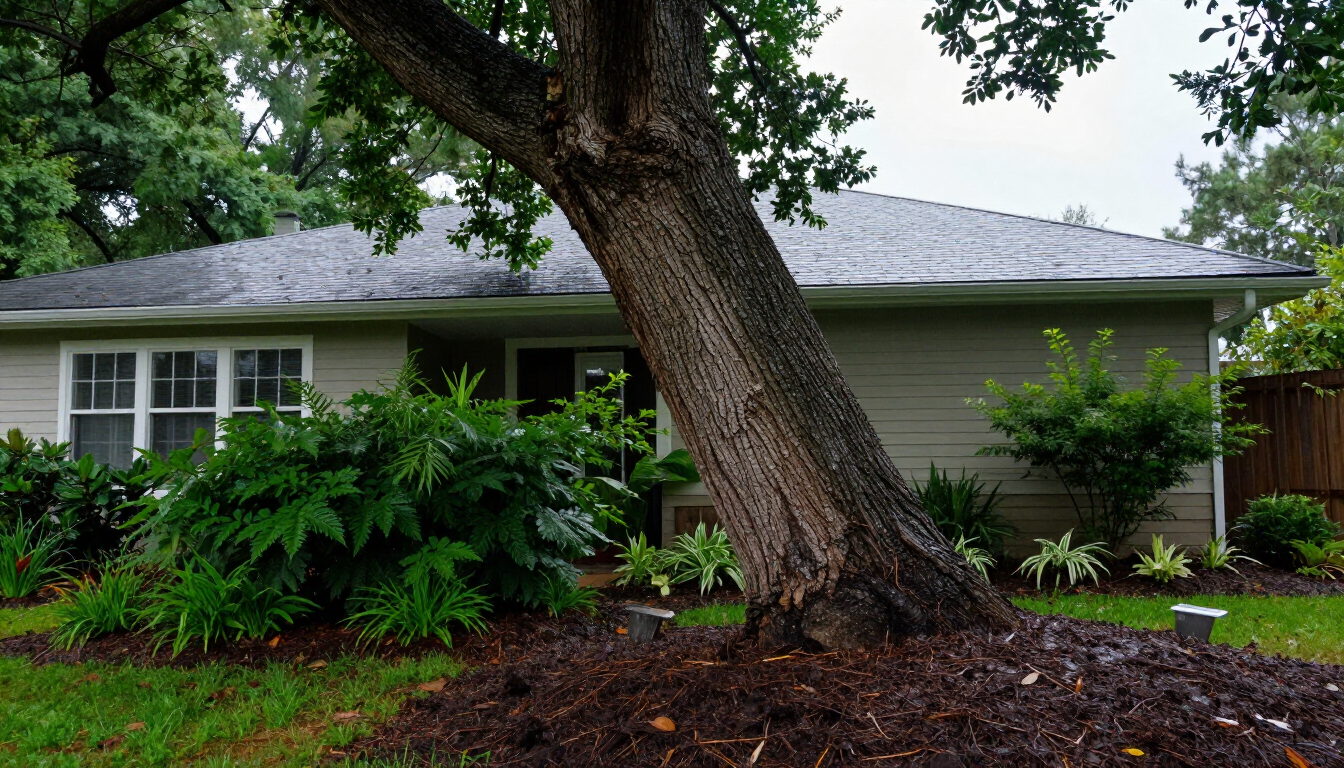
2. Sudden or Increasing Lean
Trees naturally develop slight directional growth over time, especially toward sunlight. However, a sudden lean—or a lean that continues increasing—is often a serious warning sign.
Leaning trees commonly indicate:
- Root plate failure
- Soil movement or erosion
- Storm-related root damage
- Compromised structural balance
Trees rarely recover from significant leaning without intervention. If the root system has been damaged or destabilized, the tree may fail unexpectedly, especially during saturated soil conditions or high winds.
Additional warning signs include:
- Exposed roots
- Soil lifting on one side
- Cracking ground around the base
- Separation between roots and soil
A professional inspection can determine whether stabilization is possible or if removal is necessary for safety.
3. Cracks in the Trunk or Major Limbs
Cracks weaken a tree’s load-bearing capacity and significantly increase the likelihood of structural failure. Even small splits can expand over time as the tree responds to wind, weight, moisture, and seasonal stress.
Cracks are especially concerning when they appear near major branch unions or at the trunk base, where structural loads are highest.
| Crack Type | Meaning | Risk Level |
|---|---|---|
| Vertical crack | Internal stress or structural weakness | High |
| Horizontal crack | Severe structural compromise | Critical |
Because cracks often worsen gradually, early evaluation is essential before failure occurs.
4. Fungus or Mushroom Growth
Fungal growth is frequently misunderstood as a cosmetic issue, but mushrooms growing on or near a tree often indicate internal decay. By the time fungal bodies become visible externally, substantial decomposition may already exist inside the trunk or root system.
Decay weakens wood fibers, reducing structural stability even if the tree still appears healthy from a distance.
Warning signs include:
- Mushrooms growing at the base of the trunk
- Soft or hollow wood
- Bark deterioration or sloughing
- Cavities or openings in the trunk
Professional arborists evaluate the extent of decay and determine whether the tree can safely remain standing.
5. Leaf Discoloration or Sparse Canopy
Changes in foliage are often among the earliest indicators of stress. Leaves reflect the tree’s ability to transport water, absorb nutrients, and sustain healthy growth.
Uniform discoloration, thinning canopy density, or premature leaf drop may indicate systemic problems that require attention.
| Symptom | Possible Cause |
|---|---|
| Yellowing leaves | Nutrient deficiency or root damage |
| Early leaf drop | Stress, pests, or disease |
| Sparse canopy | Declining vitality or environmental stress |
Because many conditions produce similar symptoms, accurate diagnosis is critical before treatment begins.
6. Root Damage or Soil Disturbance
Tree roots are responsible for both structural support and nutrient absorption. Damage to the root system can compromise stability long before symptoms appear in the canopy.
Construction activity, trenching, soil compaction, grading, and heavy equipment frequently injure roots without homeowners realizing it.
Signs of root-related stress include:
- Exposed roots
- Soil compaction
- Reduced growth
- Canopy thinning
- Sudden leaning
Root problems are especially dangerous because they affect the tree’s anchoring system directly.
7. Storm Damage
Storms often reveal hidden weaknesses that were already developing inside the tree. Wind loading, saturated soil, lightning strikes, and heavy branch movement can all create structural damage that may not be immediately visible.
Even if a tree remains standing after a storm, delayed failure is still possible.
Post-storm warning signs include:
- Hidden trunk cracks
- Partially broken limbs
- Split branch unions
- Root destabilization
- Sudden canopy imbalance
Professional assessment after severe weather helps identify hazards before they become emergencies.
Risk Assessment Framework
| Condition | Risk Level | Recommended Action |
|---|---|---|
| Dead branches | Medium | Schedule pruning |
| Leaning tree | High | Immediate inspection |
| Cracks | High | Structural evaluation |
| Fungus | High | Decay assessment |
| Root damage | High | Stabilization or removal |
Common Mistakes Homeowners Make
Waiting Too Long
Tree problems rarely improve without intervention. Delaying action often allows structural weaknesses or disease to progress until emergency removal becomes necessary.
Misdiagnosing Symptoms
Surface symptoms can be misleading. What appears to be simple discoloration may actually reflect root failure, vascular disease, or severe environmental stress.
Attempting Hazardous DIY Work
Improper pruning, climbing, or branch removal creates significant injury risks and can worsen structural instability.
When Professional Tree Services Are Critical
- The tree threatens structures or people
- Visible structural damage exists
- Disease or decay is present
- Large limbs require removal
- Storm damage has occurred
- The tree shows rapid decline
Professional tree services ensure accurate diagnosis, safe execution, and informed recommendations based on tree biology and structural assessment.
Conclusion
Tree problems rarely resolve on their own. Most structural failures, disease progression, and hazardous conditions begin with subtle warning signs that gradually worsen over time.
Early detection not only improves safety but also increases the likelihood of preserving healthy trees before damage becomes irreversible.
When something feels “off” with a tree, professional evaluation provides clarity, reduces risk, and helps homeowners make informed decisions that protect both their landscape and their property.